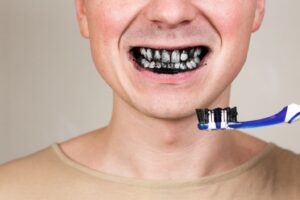
A bright, white smile is something many people want, and charcoal toothpaste has become a popular option for achieving it. From social media trends to products lining store shelves, activated charcoal is often promoted as a natural way to remove stains and whiten teeth. But is charcoal actually safe for your smile? Let’s talk about how these products work, their potential risks, and safer, more effective options.
How Does Charcoal Whiten Teeth?
Activated charcoal is a fine, highly absorbent form of carbon. In oral care products, it is marketed as a way to attract and remove surface stains caused by coffee, tea, red wine, and other foods and beverages.
However, charcoal primarily works through physical abrasion rather than the chemical bleaching process used in professional teeth whitening treatments. While it may help remove some surface discoloration, there is limited scientific evidence that charcoal toothpaste provides significant whitening benefits compared with conventional toothpaste.
Charcoal products also cannot reliably change the natural color of your teeth or remove deeper stains within the enamel and dentin. If your discoloration is more than superficial, charcoal may not deliver the results you’re looking for.
What Are the Risks of Using Charcoal on Your Teeth?
One of the biggest concerns with charcoal toothpaste is its potential abrasiveness. Depending on the formulation, repeated use may wear down enamel over time. Enamel does not grow back, so excessive wear can leave teeth more vulnerable to sensitivity and other problems.
As enamel thins, the naturally yellowish dentin underneath may become more visible, potentially making teeth appear yellower rather than whiter. Abrasive products may also contribute to gum irritation, particularly when brushing too aggressively.
Another concern is that some charcoal toothpastes do not contain fluoride. Fluoride helps strengthen enamel and prevent cavities, making it an important ingredient in preventive oral care. Replacing fluoride toothpaste with a charcoal product that lacks fluoride could mean missing out on this important protection.
Charcoal products may also leave dark residue around the gums or dental restorations. Their effects on existing restorations, including crowns and veneers, can vary, and they generally do not whiten these materials.
What Are Safer Alternatives for Whitening Teeth?
If you want a brighter smile without unnecessarily risking your oral health, consider these alternatives:
- Professional teeth whitening: Your dentist can recommend an appropriate treatment based on your oral health, the cause of your discoloration, and your whitening goals. In-office treatment can produce dramatic results in a shorter amount of time, while take-home kits offer cosmetic improvements from the comfort of your home.
- Regular dental cleanings: Professional cleanings remove plaque, tartar, and certain surface stains that routine brushing may not eliminate.
- Whitening toothpaste: Products with appropriate abrasives can help remove surface stains when used as directed. Choose one that contains fluoride.
- Whitening strips: Peroxide-based products can lighten natural teeth beyond surface stains when used according to the instructions.
Before starting a whitening treatment, consult your dentist if you have sensitive teeth, untreated cavities, gum disease, or dental restorations.
Although charcoal toothpaste may seem like a natural shortcut to a whiter smile, its benefits remain uncertain, and some formulations may pose risks to your enamel. For a safer approach, prioritize fluoride toothpaste, consistent oral hygiene, and evidence-based whitening treatments.
About the Practice
Amaze Dental in DeSoto offers both in-office and at-home teeth whitening treatments. We pay close, personal attention to our patients to ensure consistent results, and we do so in a high-tech, comfortable office. We’d love to see your confidence bloom from a brilliant white smile! Book your consultation online or call (972) 230-1100.